
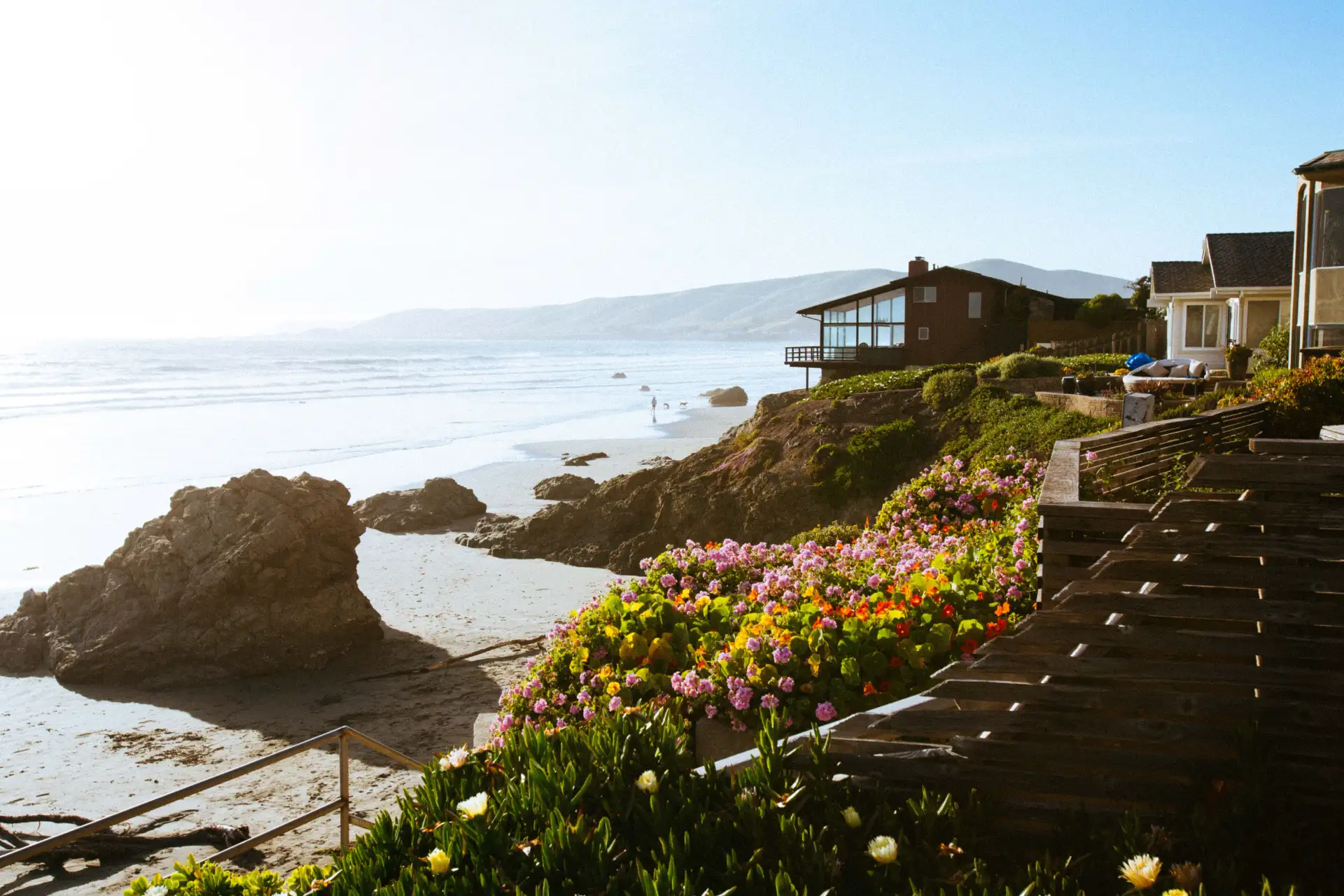
A home near the Pacific Ocean can offer beautiful scenery and easy access to coastal recreation, but owning one involves considerations that may not be obvious during a property showing.
Buying a coastal home in Westside Santa Cruz means looking beyond the architecture, ocean views, and proximity to West Cliff Drive. Buyers also need to understand coastal erosion, flood exposure, insurance coverage, building maintenance, local permitting requirements, and long-term ownership costs.
Westside Santa Cruz includes established neighborhoods near Natural Bridges State Beach, West Cliff Drive, and residential streets extending inland toward UC Santa Cruz. Each property offers a different combination of location, physical condition, and potential environmental exposure.
For first-time buyers, relocating households, and buyers considering luxury coastal properties, understanding these differences can help prevent expensive surprises.
This guide explains the most important coastal homebuying considerations using local information, official regulations, and 2026 housing market data. You’ll learn what to investigate, which documents to request, and how to evaluate a property’s suitability before purchasing.
Start by exploring Westside Santa Cruz homes for sale to compare available properties, locations, and housing options.
What Should Buyers Know About Coastal Homes in Westside Santa Cruz?
Coastal homes in Westside Santa Cruz include properties directly facing the Pacific Ocean, residences several blocks inland, and houses within neighborhoods influenced by the coastal environment.
A home doesn’t need to have an ocean view to be considered a coastal property. Its location, exposure to salt air, drainage conditions, and applicable planning regulations may still affect ownership.
Coastal Housing Options in Lower Westside
Lower Westside includes residential streets near West Cliff Drive, Natural Bridges State Beach, and The Circles neighborhood.
Buyers may encounter beach cottages, Craftsman-style bungalows, detached single-family homes, renovated residences, and some condominiums or townhomes.
Potential benefits include:
- Access to coastal walking and cycling routes from certain streets.
- Proximity to West Cliff Drive and shoreline recreation.
- A variety of traditional and renovated residential properties.
- Nearby shops and restaurants around Swift Street and Mission Street.
Realtor.com’s October 2026 housing data reported a $1,995,000 median listing price in The Circles, a Lower Westside neighborhood.
This is not the median price of every Lower Westside coastal property or a median completed-sale price.
Buyers considering these residential areas can explore Lower Westside Santa Cruz homes for sale.
Upper Westside as an Alternative
Upper Westside extends inland toward UC Santa Cruz and includes ranch-style homes, detached houses, custom residences, and some attached housing.
Potential benefits include:
- Proximity to UCSC from certain residential locations.
- Access to inland recreation and established neighborhoods.
- Different architectural styles and lot characteristics.
- Opportunities to compare hillside and less coastal-exposed settings.
Realtor.com’s October 2026 data showed a $2,237,500 median listing price in Westlake, an Upper Westside-associated neighborhood.
Again, this represents neighborhood asking prices, not a median for all Upper Westside homes.
Buyers who want to compare coastal locations with inland residential settings can explore Upper Westside Santa Cruz homes for sale.
Coastal Erosion and Flood Risks Near West Cliff Drive
West Cliff Drive is known for its scenic coastline, but portions of the corridor have also experienced storm damage and coastal erosion.
Understanding West Cliff Drive coastal erosion risks is particularly important for buyers considering properties near the shoreline or coastal bluffs.
What Is Coastal Erosion?
Coastal erosion occurs when natural processes, including wave action, storms, and weathering, gradually or suddenly remove material from the shoreline or coastal bluffs.
The risk varies depending on geology, elevation, distance from the bluff edge, drainage, existing protective structures, and other site conditions.
A property near the ocean is not automatically at risk of bluff failure. Likewise, a home outside an identified flood zone isn’t necessarily free from coastal erosion concerns.
What Does 2026 Local Information Show?
In an August 20, 2026 update, the City of Santa Cruz reported that erosion near Getchell Street had brought the bluff edge to within approximately 5 feet of the existing West Cliff multi-use pathway in some locations.
The city described plans to move affected sections of the pathway farther inland.
Separate planning for the 800 West Cliff Drive area also involves relocating approximately 600 feet of vulnerable roadway following earlier storm and erosion damage.
These are documented public infrastructure concerns, not evidence that every nearby residential parcel faces the same risk.
What Should Buyers Investigate?
Before purchasing a coastal property:
- Review seller disclosures for known erosion, drainage, or structural concerns.
- Check applicable city coastal hazard information.
- Investigate previous geological and engineering reports.
- Examine the property’s location relative to bluffs and drainage features.
- Consult qualified geotechnical or geological professionals when warranted.
The objective is to understand the actual site’s conditions rather than assume that all homes near West Cliff Drive have identical risks.
How to Check Flood Risk for Coastal Homes in Santa Cruz
Flood risk is another important consideration when buying a home near the coast.
However, flooding and coastal erosion are different hazards, and buyers should investigate both.
A property may experience surface-water drainage problems even when it is not identified as being within FEMA’s highest-risk flood zones.
Start With Official FEMA Flood Maps
The Federal Emergency Management Agency’s Flood Map Service Center provides official flood hazard mapping used for the National Flood Insurance Program.
Buyers can search a property address to review the applicable Flood Insurance Rate Map and related flood-zone information.
Common flood-zone classifications include:
| FEMA designation | General meaning |
| Zone A or AE | Special Flood Hazard Area associated with a 1%-annual-chance flood |
| Zone VE | High-risk coastal area with additional wave-related hazards |
| Zone X | Area outside the mapped Special Flood Hazard Area, with distinctions depending on the mapping designation |
These classifications do not predict whether a specific home will flood during a particular storm.
A 1%-annual-chance flood designation describes an annual probability, not an event expected to occur only once every 100 years.
Consider Additional Coastal Risk Information
FEMA maps are useful regulatory references, but they do not capture every possible future climate scenario or every property-level hazard.
The City of Santa Cruz’s shoreline adaptation planning examines coastal flooding, erosion, and future sea-level-rise conditions.
Climate-risk models can offer additional context, but modeled projections should not be treated as guaranteed outcomes.
Before purchasing, buyers should:
- Verify the property’s official FEMA flood-zone designation.
- Review local drainage and historical water-damage information.
- Investigate applicable coastal hazard maps.
- Ask about previous flooding and water intrusion.
- Obtain professional assessments when the property warrants further investigation.
Combining multiple reliable sources provides a more complete picture than relying on a single online risk score.
Coastal Home Insurance in Santa Cruz: What Coverage Should Buyers Consider?
Insurance can materially affect the cost of owning a coastal property.
A house with an attractive purchase price may still be difficult to budget for if coverage is expensive, limited, or unavailable on acceptable terms.
Buyers should investigate insurance early enough to understand their options before making a binding financial commitment.
Homeowners Insurance vs. Flood Insurance
The California Department of Insurance explains that standard homeowners insurance generally excludes damage caused by flooding and certain earth-movement events.
Flood insurance is usually purchased separately through the National Flood Insurance Program or a private insurer.
It is important to understand that flood insurance does not necessarily cover gradual coastal erosion, landslides, or every type of earth movement.
Coverage depends on the individual policy, its exclusions, limits, deductibles, and applicable conditions.
Questions to Ask Before Purchasing
When researching coastal home insurance in Santa Cruz, ask an insurance professional:
- Is homeowners coverage available for this particular address?
- What is the estimated annual premium?
- Are there separate wind, water, or other deductibles?
- Should the property have separate flood insurance?
- Are erosion, landslide, or earth-movement losses excluded?
- What rebuilding costs and coverage limits apply?
- Are additional inspections required before coverage can be issued?
Also confirm whether your mortgage lender has specific coverage requirements.
A property in a designated high-risk flood zone may trigger mandatory flood insurance requirements for certain federally regulated or federally backed loans.
There is no reliable single annual insurance premium that applies to every Westside coastal property.
The practical approach is to obtain property-specific quotes, review policy exclusions, and incorporate the actual proposed coverage costs into your ownership budget.
Salt Air Maintenance and Coastal Property Inspections
Salt air, moisture, and changing coastal weather conditions can affect the long-term maintenance of residential buildings.
Some homes experience corrosion or accelerated exterior deterioration, particularly where materials are frequently exposed to moisture and salt deposits.
However, the condition of an individual property depends on its construction materials, exposure, maintenance history, and previous improvements.
What Should a Coastal Home Inspection Cover?
Coastal property inspections in Santa Cruz should address the home’s standard structural and mechanical components, along with any location-specific concerns.
Important areas to investigate include:
- Roofing and flashing: Signs of corrosion, leaks, aging materials, or previous repairs.
- Exterior siding and paint: Deterioration, trapped moisture, and damaged finishes.
- Windows and doors: Corroded hardware, failed seals, and water intrusion.
- Metal railings and fixtures: Rust, weakened connections, and exposed fasteners.
- HVAC equipment: Corrosion, drainage, and maintenance history.
- Foundation and site drainage: Settlement, standing water, and signs of movement.
- Decks and balconies: Structural condition, waterproofing, and safety.
These are potential inspection priorities, not a claim that every coastal house has these defects.
Understanding Long-Term Maintenance Costs
Salt air maintenance for coastal homes may involve regular cleaning, protective coatings, hardware replacement, and timely repairs.
Buyers should request available maintenance records, invoices, permits, and previous inspection reports.
For older cottages or extensively renovated homes, it is also important to understand whether improvements were properly permitted.
A general home inspection may not resolve questions about retaining walls, bluff conditions, or structural movement. Specialized inspections may be appropriate when the property’s characteristics justify them.
Instead of assuming a fixed coastal maintenance budget, obtain estimates based on the home’s actual age, size, construction materials, and condition.
Santa Cruz Coastal Zone Property Rules, Renovations, and ADUs
Some Westside properties fall within California’s legally defined Coastal Zone.
This matters because planned improvements, additions, redevelopment, and certain changes in property use may be subject to coastal development regulations.
Being near the ocean does not automatically mean every property has the same permit requirements. Buyers must verify the status of the particular parcel.
What Are Coastal Development Permits?
The California Coastal Commission explains that development within the Coastal Zone generally requires an applicable Coastal Development Permit, unless an exemption or exclusion applies.
The term development can cover more than new home construction. Certain additions, changes in use, grading, and other improvements may also require review.
For properties within the City of Santa Cruz, buyers should consult the city’s planning staff and applicable Local Coastal Program requirements.
Can You Build an ADU on a Coastal Property?
An accessory dwelling unit can provide additional residential space, but available yard space does not guarantee approval.
The City of Santa Cruz requires building permits for ADUs. Some projects within the Coastal Zone also require Coastal Permits.
The city identifies additional parking requirements in certain coastal locations, making parcel-level verification essential.
Before purchasing a home with ADU plans, buyers should:
- Verify the zoning and Coastal Zone status.
- Review the applicable building and planning rules.
- Confirm whether a Coastal Permit is necessary.
- Check any location-specific parking requirements.
- Verify permits for existing secondary units.
- Request professional estimates for the proposed work.
Buyers should also investigate restrictions affecting rentals or other intended uses before assuming an ADU can generate income.
The safest approach is to confirm feasibility with the appropriate city departments before relying on future construction plans.
Westside Coastal Home Prices and a Practical Buying Checklist for 2026
Understanding the Westside Santa Cruz coastal home ownership costs starts with accurate market data.
Coastal properties differ considerably in price depending on lot size, property condition, proximity to the water, architectural characteristics, and available views.
However, a neighborhood’s median asking price should not be confused with a verified median sale price for coastal homes specifically.
2026 Westside Real Estate Market Snapshot
| Market area | Reported price | Price measurement |
| The Circles, Lower Westside | $1,995,000 | Median listing price, October 2026 |
| Westlake, Upper Westside-associated | $2,237,500 | Median listing price, October 2026 |
| Santa Cruz citywide | $1,474,500 | Median listing price, October 2026 |
| Broader Westside search area | $1,700,000 | Median listing price, early November 2026 |
These figures cover different geographic areas and property mixes. They are not interchangeable with median closed-sale prices for all coastal homes.
RealtyHop’s Westside snapshot also reported 29 active residential listings, with the middle half of asking prices between approximately $999,000 and $2,535,000.
That range reflects a broad listing inventory, not a verified coastal-home price range.
Additional Ownership Expenses to Consider
Beyond the purchase price, plan for:
- Property taxes and applicable assessments.
- Mortgage payments and financing costs.
- Homeowners and potentially separate flood insurance.
- Routine maintenance and a repair reserve.
- Specialized inspections when necessary.
- HOA dues and assessments, if applicable.
- Permitting and professional consultation for proposed improvements.
Final Coastal Home Buying Checklist
Before completing a purchase, make sure you’ve investigated:
- Location: The property’s exact coastal setting and relevant hazard information.
- Disclosures: Known defects, previous water intrusion, and documented repairs.
- Flood maps: Official FEMA designations and applicable local information.
- Insurance: Coverage availability, premiums, deductibles, and exclusions.
- Inspections: Roof, drainage, foundations, exterior materials, and specialized conditions.
- Permits: Previous additions, renovation records, ADUs, and Coastal Zone requirements.
- Pricing: Recent comparable closed sales, not just current asking prices.
- Ownership costs: A realistic budget for maintenance, insurance, taxes, and potential repairs.
If schools matter to your search, nearby campuses worth researching include Bay View Elementary School, Westlake Elementary School, Mission Hill Middle School, and Santa Cruz High School. Confirm the school assigned to any specific property through Santa Cruz City Schools, since proximity does not guarantee enrollment.
Make an Informed Coastal Home Purchase
Buying a coastal home in Westside Santa Cruz can provide access to the Pacific coastline, distinctive residential architecture, and an appealing range of outdoor activities.
The most successful buying decisions, however, begin with understanding the property itself.
From coastal exposure and insurance to inspections, permits, and ownership expenses, each detail contributes to the long-term suitability of a home.
Charlie Lambert can help you explore available Westside properties, compare local housing options, review relevant market information, and identify questions to raise during the purchasing process.
If you’re considering a coastal home near West Cliff Drive, Natural Bridges, or elsewhere in Westside Santa Cruz, contact Charlie to discuss your priorities and approach your search with a clearer understanding of the opportunities and responsibilities involved.
Frequently Asked Questions About Buying a Coastal Home in Westside Santa Cruz
An early-November 2026 RealtyHop snapshot reported a median listing price of $1,700,000 for its broader Westside search area. The middle half of active asking prices ranged from approximately $999,000 to $2,535,000. Realtor.com’s October 2026 data also showed a median listing price of $1,995,000 in The Circles, a Lower Westside neighborhood. These are asking-price statistics, not average completed sale prices or verified medians for coastal homes specifically.
Westside Santa Cruz offers different housing options, including single-family homes, cottages, condominiums, townhomes, and custom residences. First-time buyers may want to compare affordability, financing, and ongoing ownership expenses, while relocating households may prioritize transportation and neighborhood amenities. Buyers interested in coastal properties should also investigate insurance availability, maintenance, and environmental conditions. Whether Westside is a good fit depends on the individual property’s characteristics, the buyer’s budget, and personal priorities.
Schools worth researching include Bay View Elementary, Westlake Elementary, Mission Hill Middle School, and Santa Cruz High School. Lower Westside neighborhoods near West Cliff Drive and The Circles offer coastal residential settings, while Upper Westside includes established neighborhoods closer to UC Santa Cruz. No single neighborhood or school is universally best, because buyers have different priorities regarding education, housing, transportation, and amenities. School assignments should be verified for each property using Santa Cruz City Schools’ official school locator.
Some locations along West Cliff Drive have experienced documented coastal erosion and storm damage. In August 2026, the City of Santa Cruz reported that erosion near Getchell Street had brought the bluff edge within approximately 5 feet of the existing coastal pathway in certain areas. However, this does not mean every nearby residential property faces the same level of risk. Buyers should review property-specific disclosures, local hazard information, and appropriate geological or engineering assessments when warranted.
Buyers can search the property’s address using FEMA’s official Flood Map Service Center to review its designated flood zone. They should also investigate city drainage information, previous water damage, and applicable coastal hazard assessments. A home outside a FEMA Special Flood Hazard Area can still experience flooding or other coastal-related problems. Professional assessments may be appropriate when the property’s location or history raises additional concerns.
Standard homeowners insurance generally does not cover flood damage, according to the California Department of Insurance. Flood coverage is typically purchased separately through the National Flood Insurance Program or private insurers. Flood insurance may also exclude gradual erosion, landslides, and certain earth-movement losses. Buyers should review actual policy terms, obtain property-specific quotes, and confirm lender requirements before purchasing a coastal home.
An accessory dwelling unit may be possible on an eligible Westside residential property, subject to applicable City of Santa Cruz regulations. All ADUs require building permits, and some projects within the Coastal Zone also require Coastal Permits. Certain coastal locations have additional parking requirements that buyers should investigate before planning construction. Property owners should confirm parcel eligibility, existing permits, and proposed development requirements with city planning staff before relying on future ADU plans.